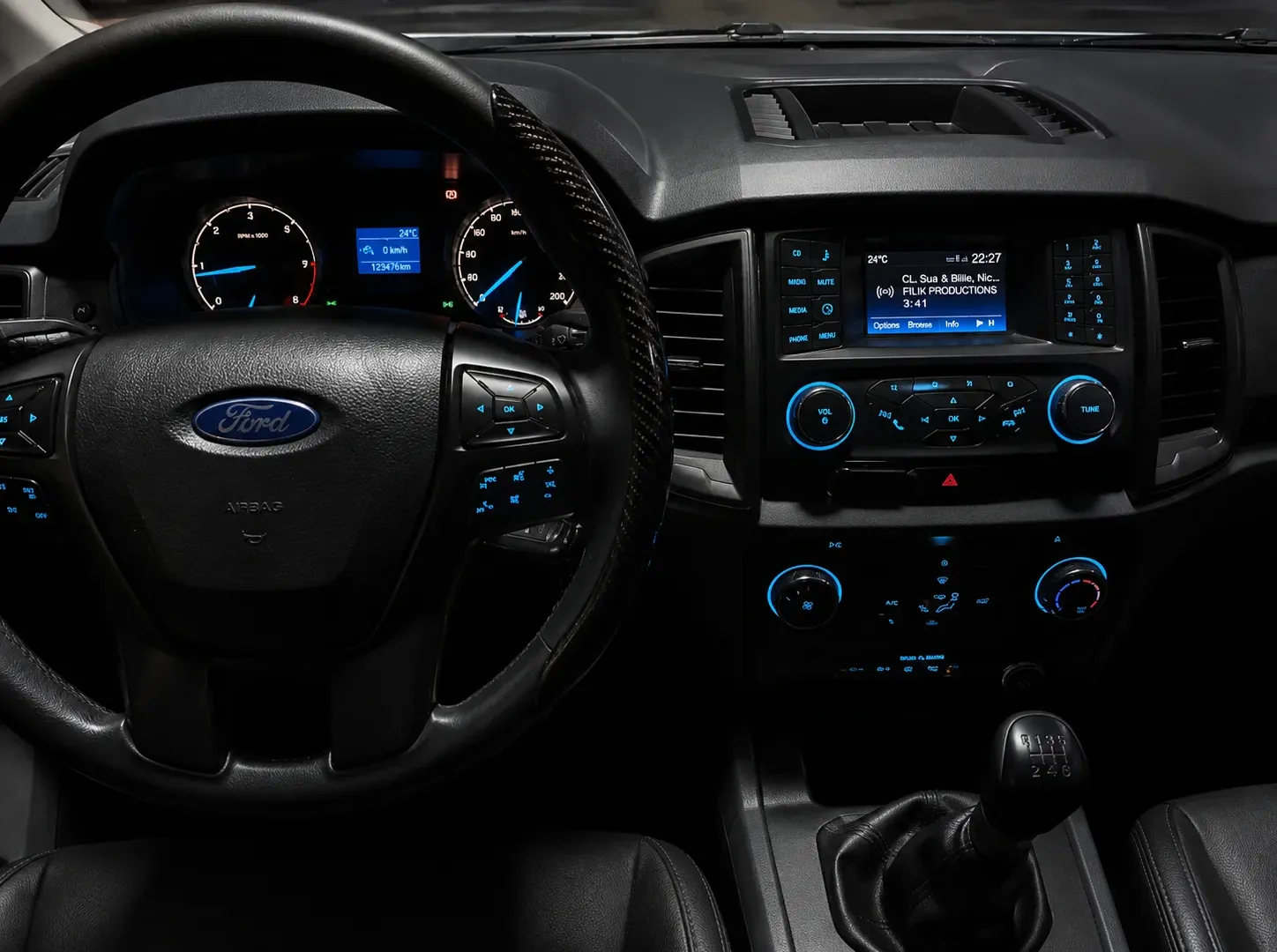
Ultimate Ford Everest Maintenance Cost Guide - Apex Engine
Apex Engine covers the Ford Everest PMS interval, its debated wet timing belt, past maintenance pricing, and confirmed PH recalls. Read the complete guide.
The Ford Everest is the tech-forward answer to the Fortuner and Montero Sport — sharper to drive, loaded with driver-assist features, and built on the same tough Ranger pickup platform. It’s also the one with the “mahal daw magpa-maintain” reputation in PH car-buyer conversations. Some of that is real and documented; some of it needs updating for the current generation. This guide separates what’s actually verified — official PMS interval, recall history, dealer network — from what’s still an open question. This is the Everest companion to our general PMS cost guide.
Key Takeaways
- Current PH Everest is the 3rd-generation “Next-Gen” model (T6 platform), on sale here since July 2022 — no structural facelift since, just variant and price adjustments through 2025.
- 4x2 trims get a 2.0L Single-Turbo diesel (~170 PS/405 Nm) with a 6-speed automatic; 4x4 trims get a 2.0L Bi-Turbo diesel (~210 PS/500 Nm) with a 10-speed automatic — engine and gearbox follow the drivetrain, not the trim name.
- Both current engines use a “wet” timing belt (belt-in-oil), not a chain — a genuine, PH-review-flagged long-term reliability question, and reportedly being phased out for a chain on the Single-Turbo starting with the 2026 model year.
- Official PMS interval for the 2.0L engine is reported at 10,000 km / 12 months — a longer calendar leg than most Japanese rivals, though Ford PH hasn’t published a current peso price list for it.
- Three confirmed Philippine recalls exist: a 2020 transmission software fix, the 2022 (relaunched 2026) Takata airbag campaign, and a 2023 E-Shifter software fix.
- Ford Group Philippines runs roughly 50 dealerships nationwide — smaller than Toyota’s or Mitsubishi’s network, but a real, wholly Ford-owned distributor, not a third party.
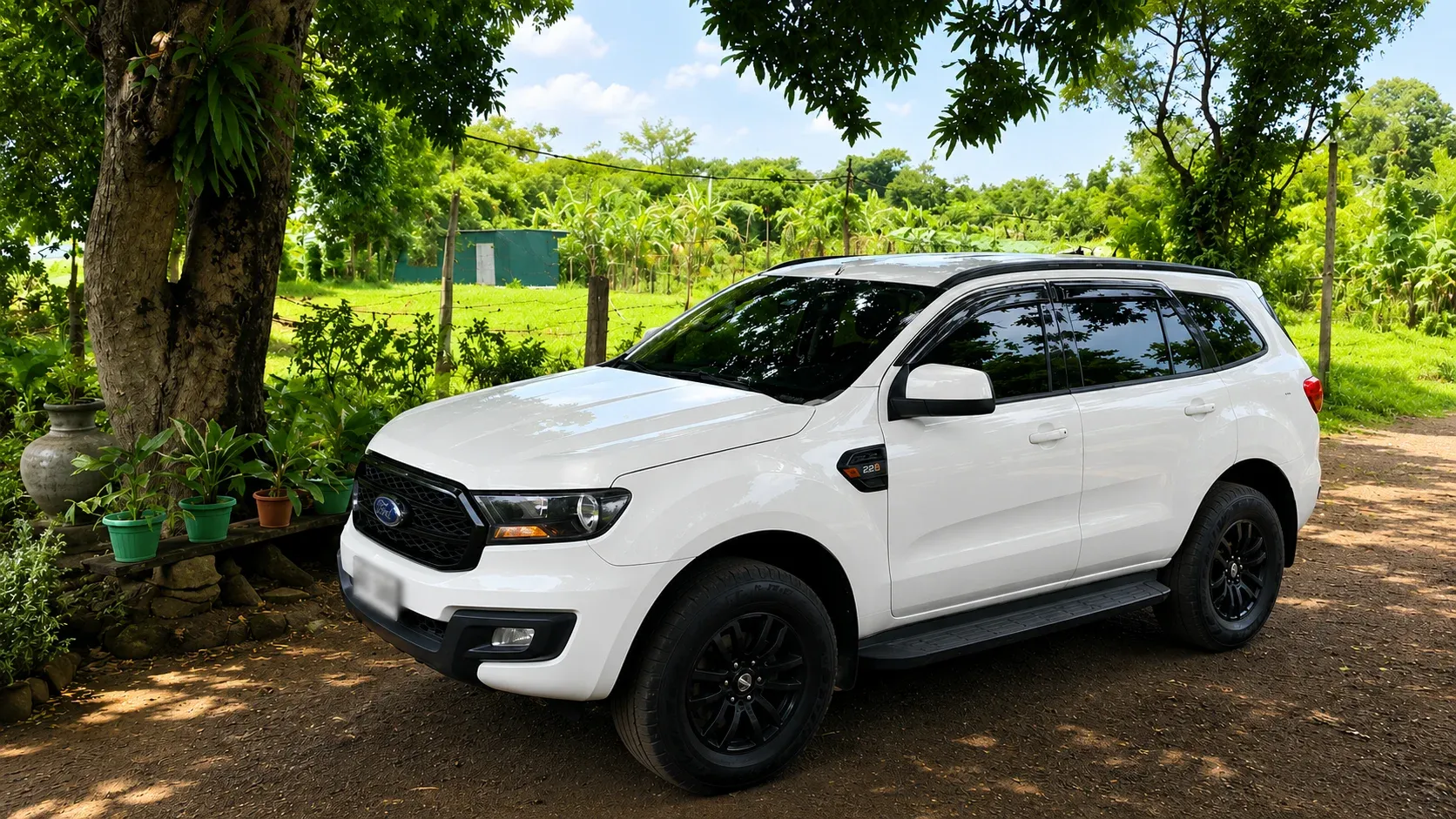
Which Model Year Does This Guide Cover? (2022–2026)
Whether you’re looking at a 2022, 2024, or 2026 Everest, you’re looking at the same 3rd-generation T6 platform — Ford PH hasn’t issued a structural facelift since the July 2022 launch. What has changed is the variant lineup: the Wildtrak trim arrived as a limited edition in August 2023 (Single-Turbo, 4x2 only), sold out and was discontinued around August 2024 alongside a ₱20,000–50,000 price bump across the range, then returned as a permanent lineup fixture in September 2025 — this time available in both 4x2 (Single-Turbo) and, for the first time, 4x4 (Bi-Turbo). A Sport Special Edition cosmetic package joined in May 2025. If you’re shopping used, note the older “Limited” and “Ambiente” trim names have both been retired and don’t apply to the current generation. The 2nd-generation Everest (2015–2022, chassis code U375) is a different platform entirely and a common used-market find — it’s outside the scope of this guide.
Ford Everest Quick Specs (Current Generation)
| Spec | Detail |
|---|---|
| Generation | 3rd-gen “Next-Gen Everest” (T6 platform), PH launch July 28, 2022 |
| Engine — 4x2 trims | 2.0L Single-Turbo diesel, ~170 PS / 405 Nm |
| Engine — 4x4 trims | 2.0L Bi-Turbo diesel, ~210 PS / 500 Nm |
| Transmission | 6-speed automatic (4x2, Single-Turbo) or 10-speed automatic (4x4, Bi-Turbo) |
| Drivetrain | 4x2 or 4x4 — trim-locked, not a same-trim option |
| Timing | Wet timing belt (“belt-in-oil”) on both current engines — not a chain |
| Emissions | Euro 4 |
| PMS interval | 10,000 km / 12 months (reported for the 2.0L EcoBlue engines) |
| Price range (2026) | ₱1,864,000 (Trend 4x2) to ₱2,640,000 (Wildtrak 4x4) |
Specs cross-checked across AutoIndustriya, Top Gear PH, CarGuide.PH, and AutoDeal — Ford PH’s own price pages could not be independently fetched at the time of writing, so confirm the current SRP and full spec sheet with your dealer before buying.
PMS Interval: Why the Everest Is a “Once-a-Year” Car
Here’s the genuinely useful part of the Everest’s maintenance story: Ford’s official schedule for the 2.0L EcoBlue engine reportedly moved the calendar leg from 6 months to 12 months, so the interval reads 10,000 km or 12 months, whichever comes first — attributed to improved oil filtration on the newer engine. That’s a real advantage over the 5,000 km/6-month rhythm most Japanese-brand diesel and gas cars run on: fewer trips to the casa per year, even at similar annual mileage.
Ford PH doesn’t use “light PMS” or “heavy PMS” as official terms, but the schedule is tiered in practice: every 10,000 km covers oil, oil filter, and air filter; every 20,000 km adds the pollen (cabin) and fuel filters; every 40,000 km adds brake fluid; and transmission fluid, differential fluid, and coolant aren’t due until 200,000 km.
PMS Cost: What’s Verified, What Isn’t
This is the honest gap in this guide: we could not find a current, official, published PMS price list for the 2.0L Next-Gen Everest. Ford PH appears to have replaced the old static price sheet with an online Service Price Calculator tool, and its output couldn’t be independently verified.
What we can confirm is historical context. Back in April 2018, Ford PH publicly cut PMS pricing on the Everest and Ranger by roughly 17–18% — reported independently across CarGuide.PH, Philkotse, Top Gear PH, and AutoIndustriya — after facing criticism that costs were too high. Under the old (2.2L/3.2L engine) price sheet at the time, a Ford PH document showed costs like ₱8,020 at 10,000 km, ₱17,940 at 20,000 km, and ₱19,470 at 40,000 km, totaling roughly ₱139,700–143,930 over 5 years/100,000 km. Even after that cut, CarGuide.PH’s own cost-per-km comparison put the Everest at roughly ₱1.40/km versus Toyota’s ~₱0.97/km at the time.
Those are 2018-era figures for a discontinued engine, so don’t treat them as current pricing — but they’re the documented root of the “Fords are mahal to maintain” reputation, and there’s no confirmed public data yet on whether that gap has closed for the current 2.0L engine. Get a quote from Ford’s Service Price Calculator or your dealer before budgeting.
The Wet Timing Belt: What You Need to Know
Both current Everest diesel engines — Single-Turbo and Bi-Turbo — use what’s called a “wet” timing belt: a belt-in-oil design instead of a traditional timing chain. It’s meant to reduce friction, but it’s also a genuinely debated reliability question, flagged even in a 2026 AutoIndustriya review of the Wildtrak 4x4 as a “concern… in terms of long-term reliability.” Ford’s official change interval is a distant 240,000 km / 10 years, but real-world reports on the shared Ranger engine describe some failures as early as 100,000–150,000 km, well short of that official figure.
Worth knowing if you’re shopping new in 2026: Ford is reportedly moving the Single-Turbo engine to a conventional timing chain starting with the 2026 model year, retiring the wet belt on that variant. If engine longevity matters to you, ask your dealer directly whether the unit you’re looking at has the older belt-in-oil engine or the newer chain-equipped one.
Known Issues on the Ford Everest
- Wet timing belt (see above) — the single most-discussed long-term reliability question on the current engine family.
- 10-speed automatic (4x4/Bi-Turbo trims only). The Ford 10R80, shared with the Ranger, has documented valve-body and torque-converter shudder complaints overseas, with real Ford technical service bulletins (TSB 20-2277, TSB 24-2046) covering dealer reprogramming or valve-body replacement. This transmission is exclusive to the 4x4 Bi-Turbo trims — the 4x2 Single-Turbo runs a simpler 6-speed automatic.
- SYNC infotainment. Older SYNC generations on previous Fords were widely criticized (Ford issued 14 software updates over 5 years on one system); the current SYNC 4A has had at least one global software update (February 2025) addressing phone-connectivity bugs. PH owner reports of the current system are sparse and mostly anecdotal — not a documented widespread defect.
- DPF/EGR (diesel particulate filter / exhaust gas recirculation). As with any modern diesel, short-trip, low-speed city driving can prevent the DPF from regenerating properly. Give it periodic highway runs and stick to the correct low-ash diesel oil.
Recall History: Three Confirmed PH Campaigns
- 10-speed transmission fluid pump gear (2020). Affected Thai-built Titanium 4x4 units (2018–2019 production) with a fluid pump gear that could fail and cause a loss of drive. Covered by Ford PH in October 2020 with a free TCM/PCM software update.
- Takata airbag inflators (2022, relaunched 2026). Covers 2006–2014 Everest units (1st-generation, relevant mainly to used-car buyers) — around 32,900 PH vehicles across the Everest, Ranger, and Mustang. Announced June 2022, and Ford PH relaunched the service campaign as recently as January 2026 for owners who never completed the repair. If you’re eyeing an older secondhand Everest, checking recall status on the VIN is a must.
- E-Shifter unexpected Park engagement (2023). A software fault on 2021–2023 Titanium 4x4 units where a low 12V battery could cause the electronic gear selector to shift to Park below 6 km/h without the brake lights activating. Announced by Ford PH around September 2023, matching a parallel Australian recall for the same defect.
No recall was found covering the current 4x2 Single-Turbo lineup or the newer Wildtrak trims — but always confirm your specific VIN with a Ford dealer, since coverage is unit-specific.
Dealer Network & Casa vs. Talyer
The Everest is sold and serviced through Ford Group Philippines, Inc., a wholly Ford-owned national distributor (not a licensed third party), running roughly 50 dealerships nationwide as of 2024–2025 — smaller than Toyota’s or Mitsubishi’s network, but a real factory-backed operation with its own parts distribution center in Calamba, Laguna.
Under warranty → Ford casa, to protect your coverage. Out of warranty → a trusted diesel-savvy talyer can save money, but the wet-belt engine and 10-speed transmission are specialized enough that DPF, timing-belt, and transmission work are best left to technicians who know this specific engine family.
What You Can DIY
Tire pressure, washer fluid, cabin filter swaps, and wiper blades are fine to handle yourself between visits. Leave the timing-belt system, DPF-related service, and any transmission work — especially on the 10-speed Bi-Turbo trims — to Ford-trained technicians.
Verdict: Sharper to Drive, With Real Homework Before You Buy
The current Everest is a genuinely well-reviewed SUV — refined, tech-forward, and less “truck-like” to drive than its diesel-SUV rivals — and its once-a-year PMS interval is a real, documented advantage over most Japanese competitors. The trade-offs are just as real: no confirmed current PMS pricing to budget against, a wet timing belt whose long-term durability is still an open question, and a smaller dealer network than the segment leaders. Ask your dealer for a Service Price Calculator quote, confirm whether your unit has the belt or the newer chain engine, and check the VIN against all three recalls before you sign.
Comparing midsize diesel SUVs? See our Toyota Fortuner PMS guide and Mitsubishi Montero Sport PMS guide — both run a conventional timing chain instead of a wet belt, if that’s the deciding factor for you. Curious about the pickup built on the same platform? See our Ford Ranger PMS guide — same engines, same wet-belt question, different body.
Frequently Asked Questions
Gaano kadalas ang PMS ng Ford Everest?
Sa opisyal na Ford PH schedule para sa kasalukuyang 2.0L EcoBlue engine, every 10,000 km o 12 months, alinman ang mauna — mas malayo ang calendar leg kumpara sa 6-month cycle ng mas lumang 2.2L Everest at ng karamihang Japanese brand. I-confirm pa rin sa iyong service booklet.
Magkano ang PMS ng Ford Everest?
Walang current, publicly-posted na presyo ang Ford PH para sa 2.0L Everest — gumagamit sila ng online Service Price Calculator sa halip na fixed price list. Ang lumang 2.2L-era na presyo (2018) ay tumakbo sa ₱8,000–19,000+ kada visit, pero hindi ito garantisadong pareho sa kasalukuyang modelo. I-check ang calculator o tumawag sa dealer para sa eksaktong quote.
Totoo ba na mahal magpa-maintain ng Ford?
May basehan ang reputasyong ito — noong 2018, binawasan ni Ford PH ang PMS cost ng Everest/Ranger ng ~17–18% matapos mapansin na mas mataas ito kaysa katunggali, pero kahit pagkatapos ng cut, mas mataas pa rin ang cost-per-km ng Ford (~₱1.40/km) kumpara sa Toyota (~₱0.97/km) noong panahong iyon. Walang verified current na 2.0L pricing para malaman kung tumagal pa rin ang gap na ito ngayong 2026.
Ano ang 'wet timing belt' sa Everest at dapat ba akong mag-alala?
Parehong 2.0L Single-Turbo at Bi-Turbo engine ng kasalukuyang Everest ay gumagamit ng timing belt na naka-submerge sa oli ('wet belt' o belt-in-oil), hindi timing chain. Opisyal na interval ay 240,000 km/10 years, pero may mga ulat ng pagkabigo sa 100,000–150,000 km sa Ranger (parehong engine family). Balitang lalabas sa 2026 model year, ilipat na ni Ford ang Single-Turbo engine sa timing chain — itanong sa dealer kung alin dito ang meron sa unit na titingnan mo.
May recall ba ang Ford Everest sa Pilipinas?
Oo, tatlong beripikadong recall: (1) 10-speed transmission fluid pump gear defect sa Titanium 4x4 units (2018–2019 gawa), na-cover noong Oktubre 2020; (2) Takata airbag inflator recall para sa 2006–2014 Everest units, inilunsad Hunyo 2022 at muling pinalabas Enero 2026 para sa mga hindi pa na-repair; (3) E-Shifter defect sa 2021–2023 Titanium 4x4 na posibleng mag-shift sa Park nang hindi sinasadya, na-announce Setyembre 2023. I-check ang VIN mo sa Ford dealer kung kasali ka.